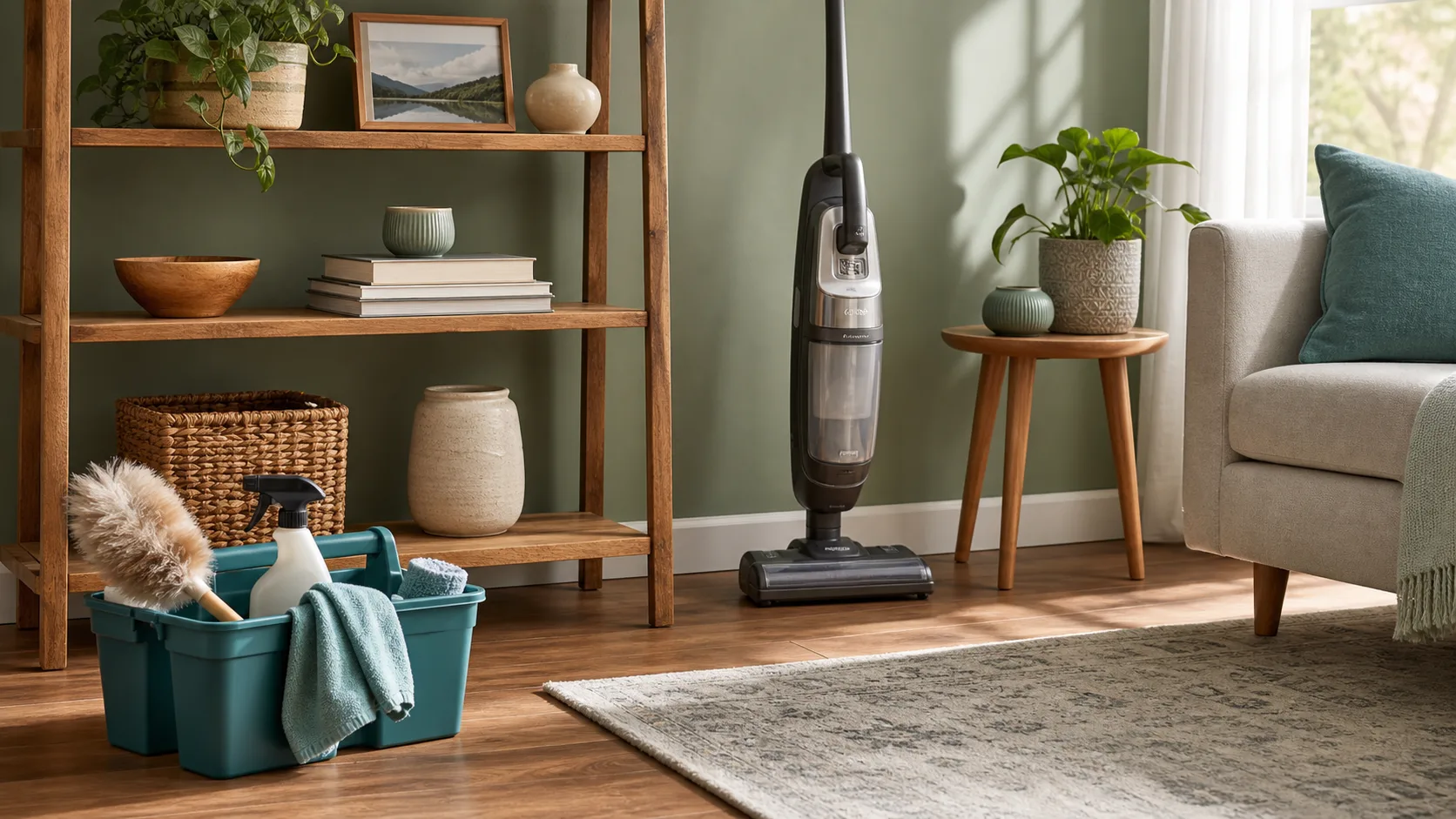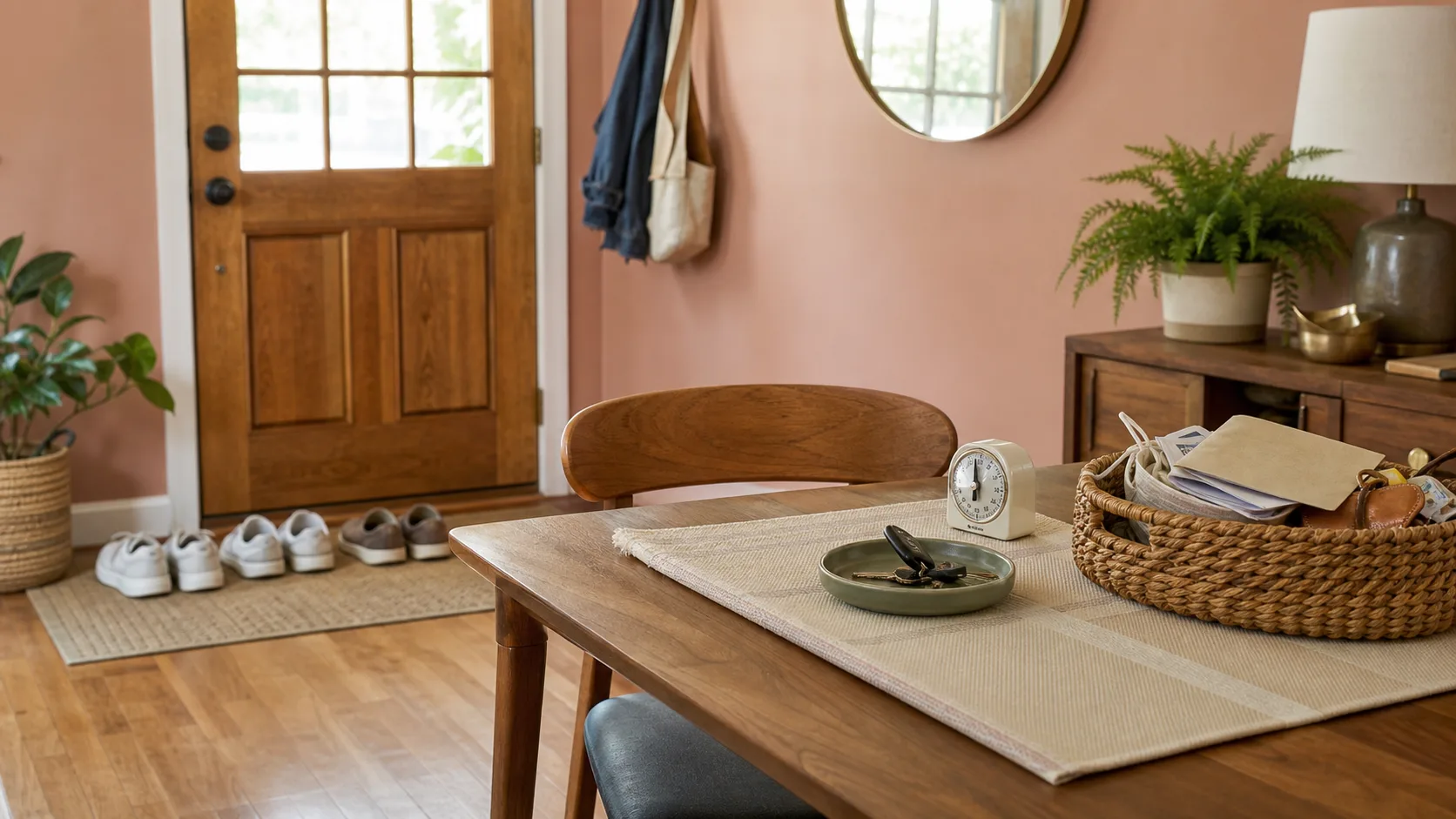
There is a particular kind of stuck that happens when the whole house feels behind at once.
The dishes, the laundry, the pile on the table, the room you stopped walking into. Every part seems to need attention, so you freeze and do none of it. Then you feel worse, which makes starting even harder.
If that is where you are, the most important thing to know is this: you do not need a perfect plan, a free weekend, or a burst of motivation. You need one small, reachable starting point. The house did not get behind in a day, and it does not have to get fixed in one either.
Here is a calm way to begin.
Quick answer
When your home feels overwhelming, do not try to fix everything. Pick one small win you can finish in a few minutes, work in short timed bursts instead of marathons, choose a single reset zone to keep clear, and build a light daily rhythm from there. Progress comes from small repeated actions, not one heroic cleanup. Start tiny, and let momentum do the rest.
The goal right now is not a clean house. It is to stop feeling stuck.
Start with one small win
When everything feels like too much, shrink the task until it is almost laughably small.
Not the kitchen. One sink of dishes. Not the bedroom. One nightstand. Not the laundry mountain. One load started.
This is not about that one small thing mattering enormously. It is about breaking the freeze. Finishing something, anything, tells your brain that progress is possible, and that feeling is what makes the next step easier. A completed tiny task beats a planned big one every time.
Pick the smallest thing you can fully finish in five minutes, and finish it. That is the whole first step.
Work in short bursts, not marathons
Long cleaning sessions are the enemy of starting. They feel huge, so you put them off.
Short bursts feel possible, so you actually begin.
Set a timer for ten or fifteen minutes and clean only until it goes off. When it rings, you are free to stop. Often you will keep going because starting was the hard part, but you are allowed to stop, and that permission is exactly what gets you moving.
A few honest things about timed bursts:
- They lower the pressure, so you start instead of avoiding.
- They prevent burnout, so you can come back tomorrow.
- They add up fast. Three short bursts in a day is a lot of progress.
You are not trying to do it all at once. You are trying to do a little, repeatedly.
Pick one reset zone
Trying to keep the whole house tidy when you feel behind is too much. So do not. Pick one zone.
Choose a single small area that, when clear, makes you feel calmer: one kitchen counter, the dining table, the bathroom sink, the spot by the front door. That becomes your reset zone.
Your only job is to keep that one zone clear. Everything else can wait. When the rest of the house feels chaotic, you have one island of calm you can always return to, and protecting it is far more sustainable than trying to hold the entire home at once.
Once that zone stays clear without much effort, you can add a second. But one is enough to start.
Separate clutter from cleaning
A lot of "behind" is not dirt. It is stuff with nowhere to go.
It helps to treat these as two different jobs:
- Clutter is objects out of place. The fix is decisions: keep it, move it, or let it go.
- Cleaning is dirt and mess. The fix is wiping, washing, and tidying.
Trying to do both at once is overwhelming, because deciding what to keep is mentally tiring while scrubbing is physically tiring. Pick one mode at a time. Often clearing the clutter first makes the cleaning quick and obvious, because you can finally see the surfaces.
Let go of catching up all at once
Somewhere in the overwhelm is a quiet belief that you have to get completely caught up before you are allowed to feel okay.
Let that go. It is the thing keeping you frozen.
You will not erase weeks of backlog in an afternoon, and you do not need to. A home is never permanently "done." It is a place you keep gently resetting. The aim is not a finished house but a manageable one, where things drift out of place and you put them back without it becoming a crisis.
When you stop demanding a perfect finish, starting gets much easier, because the stakes are no longer all-or-nothing.
Build a light daily rhythm
Once you have a little momentum, a few small habits keep the house from sliding back.
Keep it light. A heavy routine you abandon is worse than a tiny one you keep.
A gentle starter rhythm:
- A two-minute tidy of your reset zone before bed
- One load of laundry moved along each day it is needed
- Dishes dealt with after the last meal, not left overnight
- A quick five-minute pickup when a room starts to drift
That is plenty at first. These small repeated actions are what actually keep a home under control, far more than any occasional deep clean.
Be kind to yourself in the process
How you talk to yourself while doing this matters more than people admit.
Falling behind does not mean you failed. Homes fall behind during busy seasons, hard times, illness, new babies, new jobs, and ordinary overwhelm. It is normal, and it is reversible.
Speak to yourself the way you would to a friend in the same spot: with patience, not contempt. Guilt is a terrible motivator. It tends to keep you stuck, while a little self-kindness frees up the energy to actually begin.
You are not lazy. You were overwhelmed, and now you are starting. That counts.
What to try first
Right now, set a timer for ten minutes and pick the one small spot that would feel best to clear, the sink, a counter, the table by the door.
Clear only that, only until the timer rings.
When it does, you will have your first win and your reset zone in one move. Tomorrow, do another ten minutes. That is how a home that feels hopeless slowly becomes a home that feels manageable, one small step at a time.