Laundry is one of those jobs that can make a perfectly normal home feel behind. It is not just the washing. It is the gathering, sorting, moving, drying, folding, matching, carrying, putting away, and then discovering one more sock under the bed after you thought you were done.
For a long time, I treated laundry like a motivation problem. If I could just be more disciplined, I would stay caught up. But the weeks when laundry went well were not the weeks when I had more motivation. They were the weeks when the system was simple enough that I could restart without thinking too much.
That is the kind of laundry system I would build first. Not a perfect laundry room. Not a color-coded family command center. Just a repeatable rhythm that keeps clothes moving and stops clean laundry from becoming another pile to manage.
Quick answer
If laundry never feels caught up, make the system smaller. Use fewer sorting categories, give dirty laundry obvious homes, run one complete load at a time, fold near where clothes will be put away, and create one short rescue routine for the days everything has piled up.
The goal is not to finish all laundry forever. The goal is to make laundry easy to restart.
Start by deciding what caught up means
This sounds almost too simple, but it matters. "Caught up" cannot mean every single washable thing in the house is clean, folded, and put away at the same time. That standard will make you feel like you failed even when you worked hard.
For a normal home, I would define caught up more gently:
- People have clean clothes for the next few days.
- Wet laundry is not sitting forgotten.
- Clean laundry has one place to land.
- Dirty laundry is contained.
- Towels and basics are not becoming an emergency.
That is enough. Really. Laundry does not need to become a moral test.
Use fewer baskets, not more complicated sorting
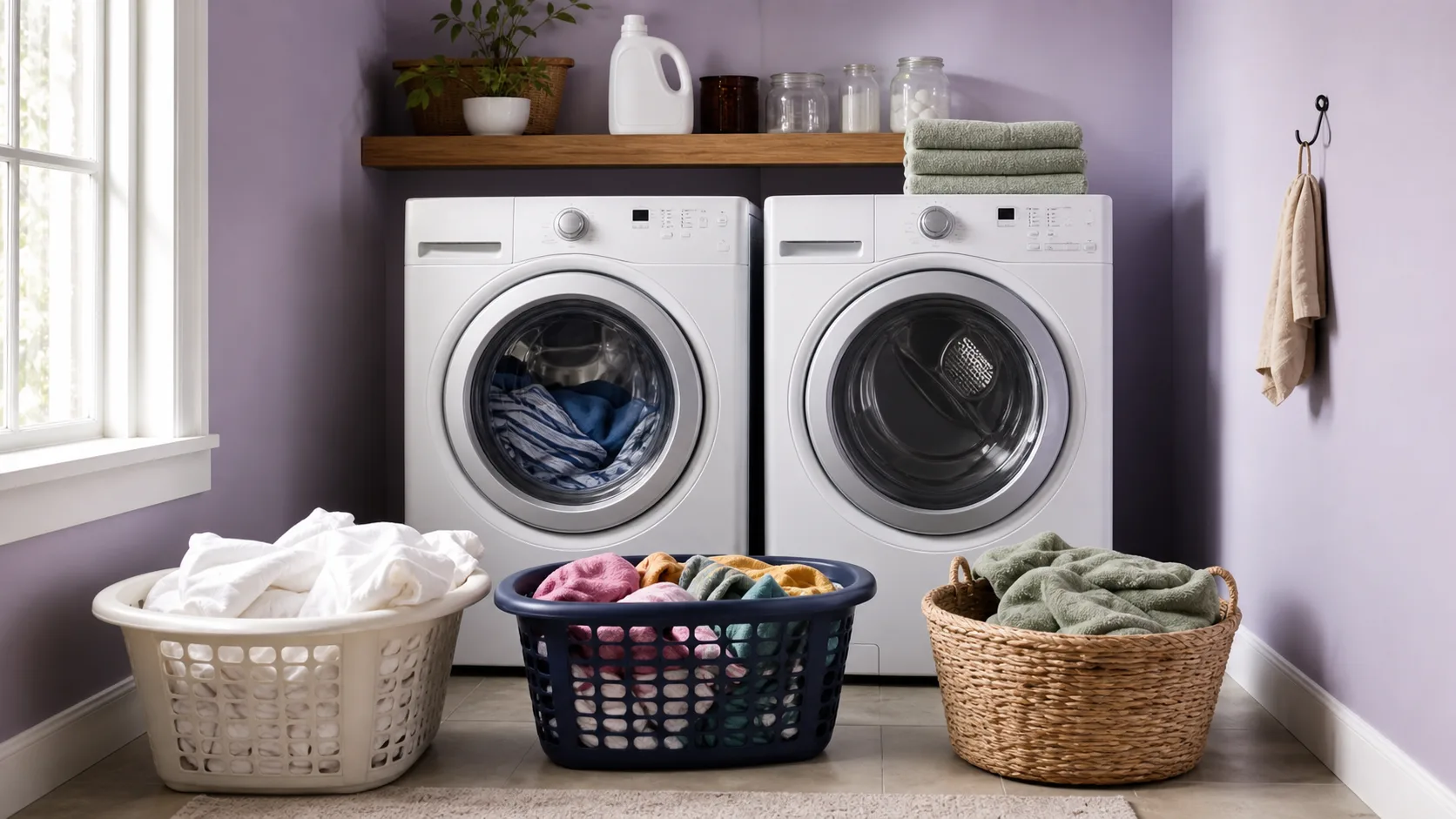
I know there are beautiful sorting systems with labels for every possible laundry category. Lights, darks, whites, towels, delicates, linens, athletic clothes, hand wash, cold wash, hot wash, and the mysterious "special" basket that nobody understands.
If that works for someone, lovely. But if laundry already feels endless, I would simplify.
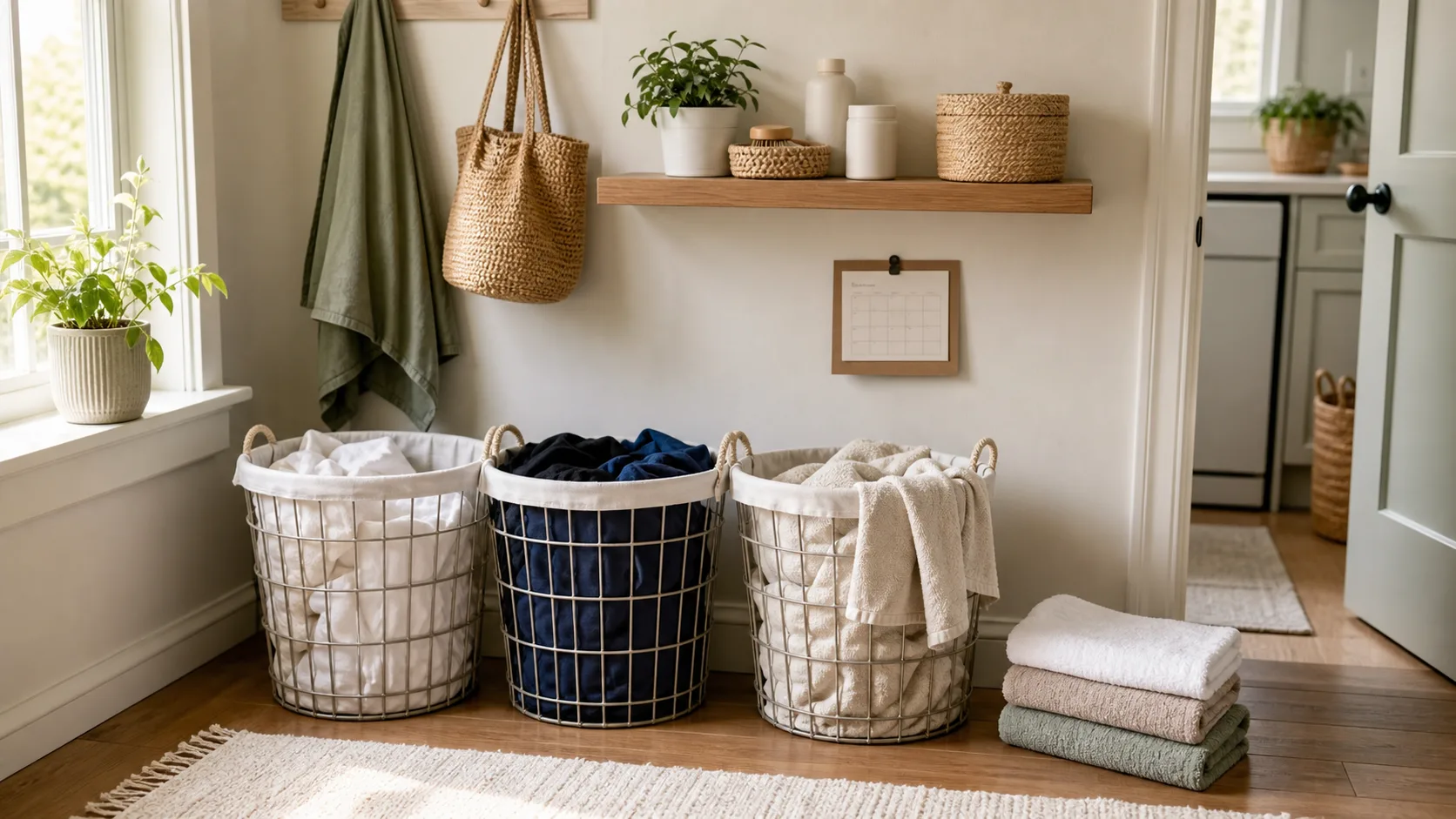
A good starter setup is:
- Everyday clothes
- Towels and cleaning cloths
- Delicates or special-care items
That is usually enough for daily life. You can still separate whites or sheets when needed, but they do not need their own permanent pile if that makes the system harder to maintain.
The best sorting system is the one people will actually use when they are tired.
Make dirty laundry easy to drop in the right place
Dirty laundry should not require a decision every time someone changes clothes. If the hamper is far away, hidden behind a door, or already overflowing, clothes will land on the floor. That is not a character flaw. That is a design issue.
I would put hampers where laundry naturally falls:
- Bedroom
- Bathroom
- Kids' rooms
- Laundry area
- Near the place towels are used
If one room always has laundry on the floor, that room is telling you something. It needs a better drop spot.
This is also where baskets can help, but only if they are easy to use. A hamper with a lid looks nice until everyone starts putting clothes on top of the lid instead of opening it. Open baskets are not always prettier, but they are often more realistic.
Run one complete load instead of starting three
This was the biggest change for me: one complete load is better than three started loads.
Starting laundry feels productive, so it is tempting to throw in a load, then another, then another. But if the first load never makes it to the dryer, or the dry clothes never get folded, the system jams.
Try this rule for a while:
Do not start a second load until the first load has moved to the next stage.
That does not mean you can only do one load in a day. It means the laundry keeps moving in order. Wash, dry, fold, put away. Or at least wash, dry, gather in a clean basket, then finish at a set time.
The point is to stop creating half-finished laundry all over the house.
Give clean laundry one landing place
Clean laundry needs a home before it reaches the couch.
I say this with affection, because the couch is where clean laundry goes to become part of the furniture. You sit beside it. You move it to one side. You search through it for pajamas. Then suddenly the pile is no longer clean in your mind, even though it technically is.
I would choose one clean laundry landing place:
- A folding table
- A clean basket for each person
- A bed that must be cleared before bedtime
- A counter in the laundry room
- A specific chair that gets emptied daily
The exact place matters less than the rule: clean laundry goes there, not everywhere.
Fold where putting away is easiest
If folding happens far from where clothes live, the folded stacks have to survive a journey. That is where things fall apart. Literally sometimes.
For family laundry, I like sorting into person-specific baskets first. Then each basket can go close to that person's room. Folding can happen there, or the person can put away directly if the clothes do not need perfect folds.
For towels, I would fold near the linen closet or bathroom if possible.
For kitchen cloths, I would fold near the drawer where they belong.
This sounds small, but it removes one of the most annoying parts of laundry: carrying neat piles through the house and hoping nothing slides off.
Stop folding things that do not need folding
Some laundry deserves a neat fold. Some laundry simply needs to be clean and findable.
I would not spend precious laundry energy folding every item perfectly. Pajamas, workout clothes, cleaning cloths, kids' play clothes, and casual basics can often be placed into drawers with a simple fold or even a tidy drop.
Ask yourself: does folding this item beautifully make life easier later?
If yes, fold it. If no, make peace with good enough.
This is especially helpful if laundry is a pain point. A slightly less perfect drawer is better than three baskets of clean clothes waiting for a perfect folding session that never comes.
Create a small rescue routine
Every laundry system needs a rescue routine, because real weeks happen. Someone gets sick. Work gets busy. Towels pile up. The washer is forgotten. Suddenly the plan feels broken.
When that happens, do not try to fix all laundry in one heroic afternoon. Start with a rescue routine:
- Gather all dirty laundry into one place.
- Start the most urgent load.
- Move any wet laundry immediately.
- Put clean laundry into one visible landing place.
- Set a timer for 15 minutes and fold only what matters first.
What matters first usually means underwear, socks, work clothes, school clothes, towels, and anything needed tomorrow.
Once the urgent items are handled, the rest feels less dramatic.
Make the system visible enough to remember
Laundry often fails quietly. A wet load sits in the washer because nobody sees it. Clean clothes wait in the dryer because the door is closed. A hamper overflows because it is tucked into a corner.
I like systems that leave small visual reminders.
That might mean:
- A basket labeled "clean"
- A timer on your phone
- A note near the washer
- A dry-erase checklist
- A laundry day basket by the stairs
- A habit of leaving the laundry room light on until the load is moved
None of this needs to be cute. It just needs to interrupt forgetfulness.
What I would buy only if it solves a real problem
Laundry products are easy to overbuy because they promise control. Before buying anything, I would name the actual problem.
If clothes pile on the floor, you may need a better hamper.
If clean laundry gets mixed together, you may need person-specific baskets.
If sweaters hang on chairs to dry, you may need a drying rack.
If stains sit too long, you may need a small stain station near the hamper.
If folding never happens, you may need fewer folding expectations, not a new organizer.
Useful laundry products are the ones that remove friction from a routine you already have. They should make the next step more obvious.
A simple starter setup
If I were starting from scratch, I would set it up like this:
- One main hamper where laundry naturally lands
- One towel basket
- One delicates or special-care basket
- One clean basket per person, if family laundry gets mixed
- One small stain kit near the laundry area
- One fold-or-sort surface that stays mostly clear
- One weekly rescue time, even if it is only 20 minutes
That is enough to begin. You can always add more later, but I would rather start with a system that feels almost too simple.
What to try first
Choose one place where laundry always piles up and put a better basket there. Not the prettiest basket. The easiest basket.
Then choose one complete load and move it all the way through the system today. Wash it, dry it, fold or sort it, and put it where it belongs.
One finished load teaches the house more than five started loads. And sometimes that is exactly the little win you need to feel back in motion.