Some days you do not want to clean. You just want the house to stop feeling like a pile of small unfinished things.
That is what a reset is for.
A reset is not deep cleaning. It is not the day you scrub the oven or wash the baseboards. A reset is a short, repeatable routine that puts the home back to a calm baseline. You are not trying to make it perfect. You are trying to make it feel okay again.
Fifteen minutes is enough for this, especially when you stop treating it as cleaning and start treating it as putting the home back where it belongs.
This checklist works on a normal busy day, after work, before guests, or in that low-energy evening hour when the day already used up your patience.
Quick answer
To reset your home in 15 minutes, set a timer and move through five zones: clear the main surfaces, reset the kitchen sink and counter, do a quick floor and walkway pass, wipe the busiest bathroom surfaces, and finish with a soft reset of pillows, blankets, and lighting. Carry a basket for things that belong in other rooms, do not stop to organize, and stop when the timer ends. The goal is a calm baseline, not a spotless house.
A reset works because it is small enough to actually do. A two-hour clean is a project you avoid. Fifteen minutes is a thing you can start right now.
Why a timed reset works
The timer is the trick, not the cleaning.
When there is no time limit, a quick tidy quietly turns into reorganizing a drawer, sorting a stack of mail, or scrubbing one spot for ten minutes while the rest of the house waits. Then you run out of energy before the room ever feels better.
A timer changes the job. You are no longer cleaning the house. You are doing 15 minutes. That is a finish line you can see.
Three things make a reset easier:
- A timer so the task has an end
- A basket so you stop walking item by item to other rooms
- A rule that you do not organize anything during the reset
If you find a pile that needs real sorting, it does not get sorted now. It goes in the basket or stays put. The reset is for surface calm, not deep decisions.
Set a timer and grab one basket
Before you start, do two small things.
First, set a timer for 15 minutes. Use your phone, your oven, anything that will tell you when to stop.
Second, pick up one basket, bin, or laundry basket. This is your "belongs elsewhere" basket. As you move through the house, anything that lives in another room goes in the basket instead of you making a trip every time. You will deal with the basket at the very end, or even tomorrow.
Now pick your path. Most homes reset best in this order: main living space, kitchen, floors, bathroom, soft finish. If your home is different, keep the idea but change the rooms.
Minutes 1 to 3: Clear the main surfaces
Start where you and other people actually see the mess: the living room, the dining table, the coffee table, the entry surface.
Move fast and only touch surfaces:
- Collect cups, glasses, and plates and carry them toward the kitchen
- Fold the blanket or just straighten it
- Square up the remote, books, and magazines
- Put stray items that belong elsewhere into your basket
- Push in the chairs
Do not vacuum yet. Do not sort the mail. Do not start a project. You are clearing flat surfaces so the room reads as calm.
A clear coffee table and a clear table will do more for how a room feels than almost anything else in this list.
Minutes 4 to 6: Reset the kitchen
The kitchen sets the tone for the whole home, so it gets its own block.
In three minutes:
- Load or empty the dishwasher, or stack dishes neatly on one side of the sink
- Wipe the main counter where you prep and drop things
- Clear the area around the stove
- Put away anything sitting out that has a home nearby
- Run the disposal or wipe the sink
If the dishes are too many for three minutes, do not try to finish them all. Get them into the dishwasher or into one tidy stack and move on. A clean counter with a neat stack of dishes feels far better than a half-finished full-sink scrub.
The point is a kitchen that looks handled, not a kitchen that is deep cleaned.
Minutes 7 to 9: Floors and walkways
Now deal with the paths people actually walk.
You are not mopping. You are clearing and quickly cleaning the high-traffic lines through the home:
- Pick up anything on the floor and add it to your basket
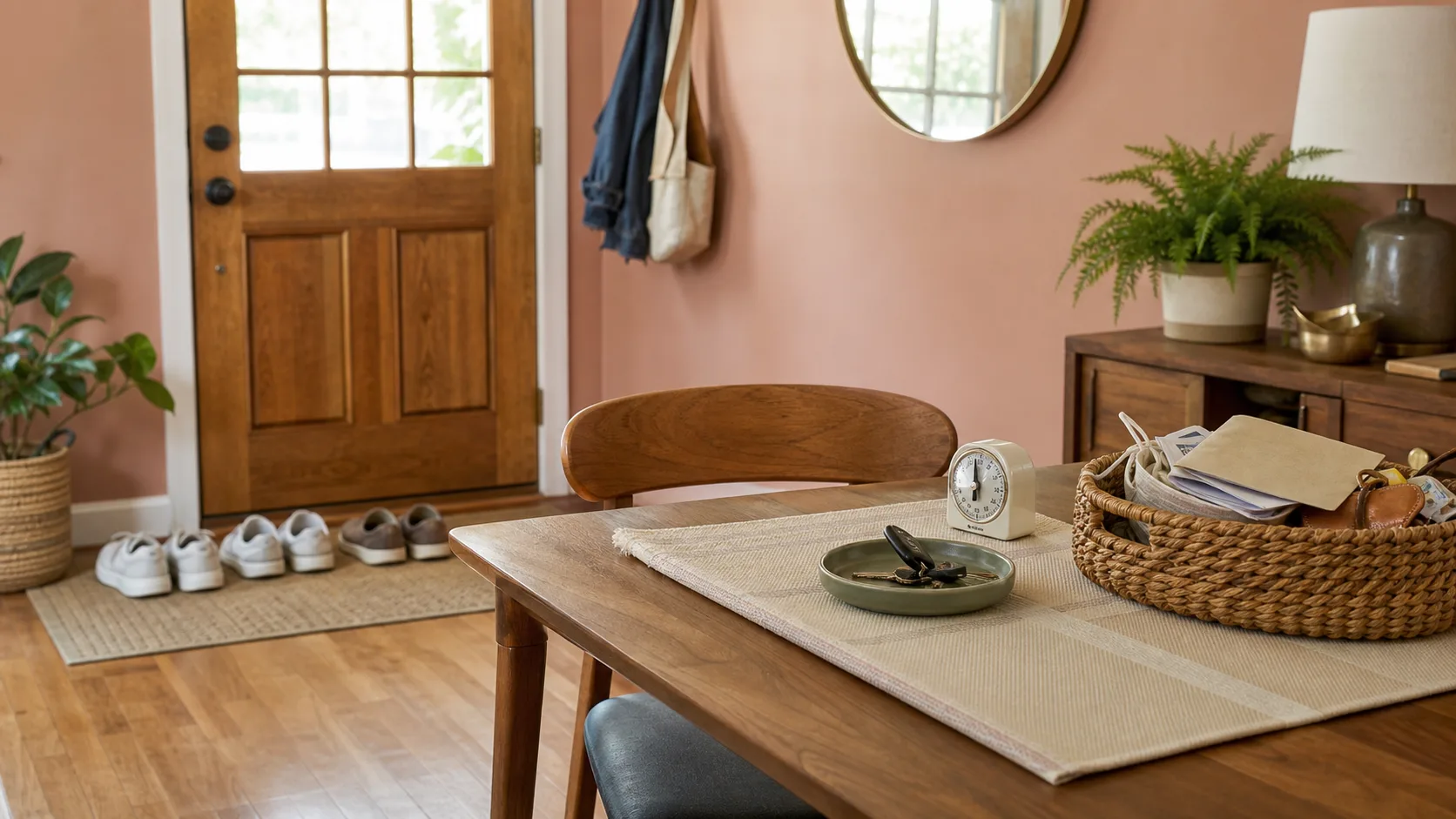
- Line up shoes by the door
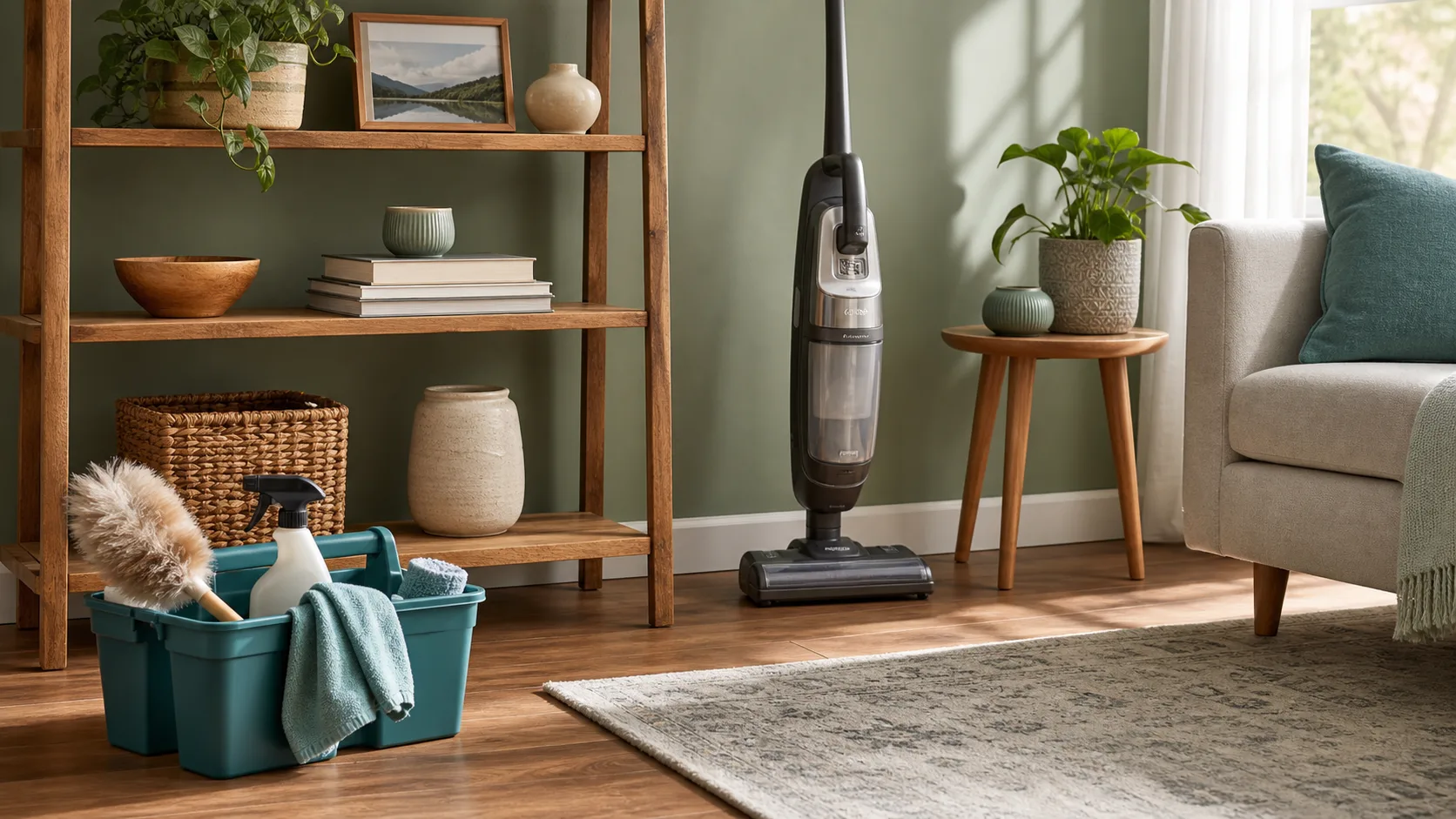
- Quickly sweep or run a cordless vacuum over the busiest path, not the whole house
- Straighten rugs
Focus on the walkway from the door through the kitchen and living space. A clear floor on the route everyone uses makes the whole place feel cared for, even if the corners wait for another day.
Minutes 10 to 12: Bathroom quick wipe
The main bathroom only needs a fast pass, especially the one guests might use.
In two minutes:
- Wipe the sink and faucet
- Wipe the counter and put products back
- Swish the toilet bowl if it needs it and wipe the seat and rim
- Square up the towels
- Drop anything out of place into your basket
Keep a few wipes or a cloth and spray under the sink so this step never requires a trip to find supplies. The bathroom that feels clean is mostly a clean sink and a tidy counter.
Minutes 13 to 15: The soft reset
The last three minutes are what make a reset feel like more than tidying. This is the part people skip, and it is the part that makes the home feel calm instead of just neat.
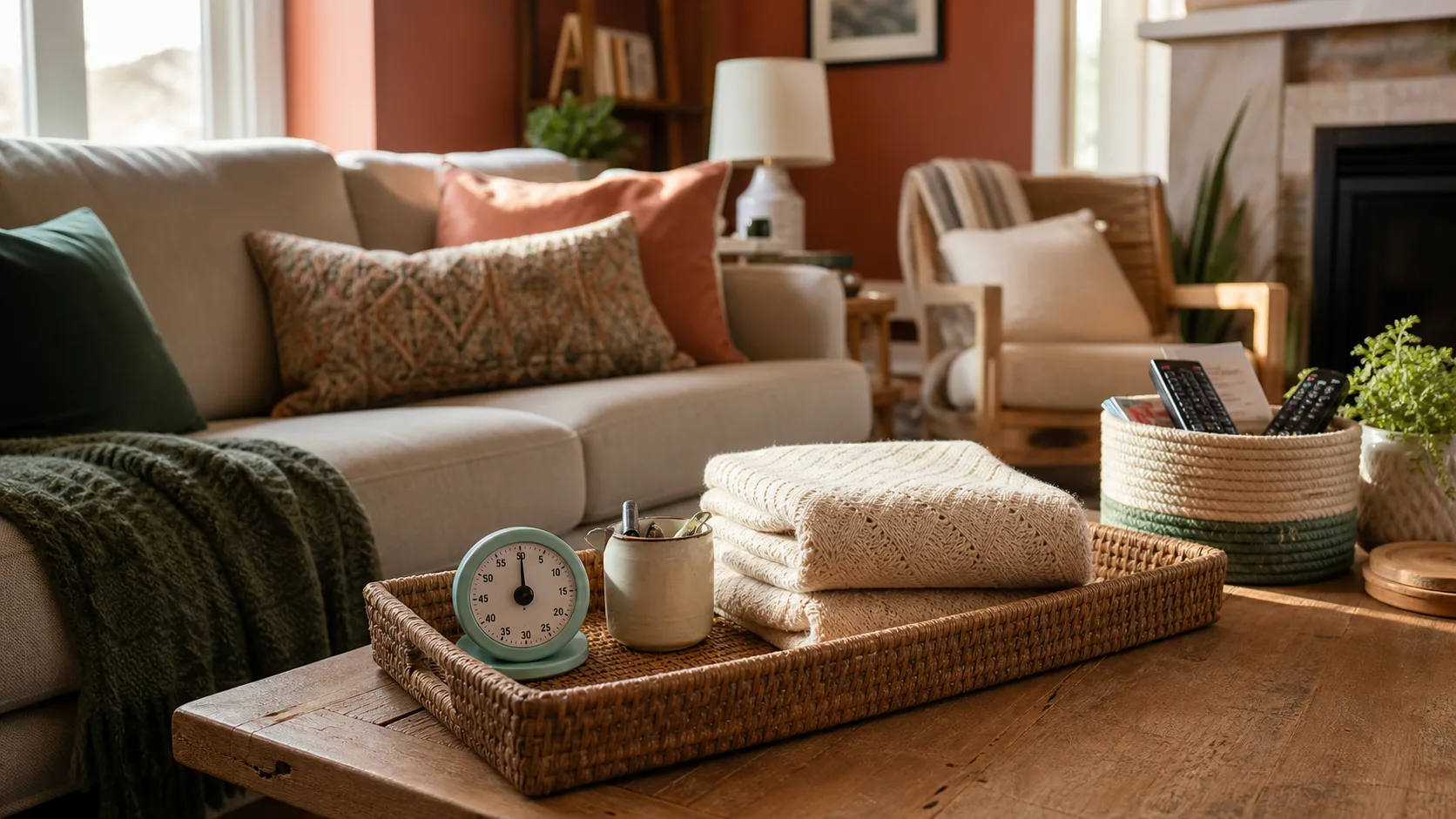
- Fluff and place the pillows and fold throw blankets
- Make or straighten the bed if you can see it from a main room
- Open or close curtains for the time of day
- Turn off harsh overhead lights and turn on softer lamps in the evening
- Take the trash out if it is full
- Quickly empty your "belongs elsewhere" basket, or set it aside for tomorrow
Lighting does a surprising amount of work here. The same room feels tense under a bright ceiling light and calm under two warm lamps. A reset is partly about how a space looks and partly about how it feels when you finally sit down.
When the timer goes off, you stop. That is the whole point. You are done.
The 15-minute reset checklist
Here is the short version to keep on your phone or the fridge.
- Set a timer for 15 minutes and grab one basket
- Clear the main surfaces and gather cups and dishes
- Reset the kitchen sink, counter, and stove area
- Clear and quickly clean the main walkways
- Wipe the bathroom sink, counter, and toilet
- Fluff pillows, straighten blankets, fix the lighting
- Empty the trash and the basket
- Stop when the timer ends
If you do these in order, the rooms that matter most are handled first. So even a reset that gets cut short still leaves the home better than it found it.
When you only have 5 minutes
Some days even 15 minutes is too much. On those days, shrink the routine instead of skipping it.
A 5-minute reset:
- Clear the kitchen counter and the table
- Put dishes in one neat stack or the dishwasher
- Fix the couch pillows and blanket
- Switch off the overhead light and turn on a lamp
That is it. Four moves. A 5-minute reset is not a failure version of the routine. It is the version that keeps the habit alive on hard days, which matters more than any single perfect clean.
What to skip during a reset
A reset breaks the moment it turns into cleaning. Protect the 15 minutes by leaving these for another time:
- Organizing drawers, closets, or cabinets
- Sorting mail and paperwork
- Deep scrubbing anything
- Cleaning out the fridge
- Folding and putting away full loads of laundry
- Starting any project that has a "while I am at it"
If you notice something that needs real attention, make a tiny note and keep moving. The reset is for getting back to baseline, not for fixing everything you notice along the way.
What to try first
Tonight, do not aim for a clean house. Aim for one reset.
Set a timer for 15 minutes. Grab a basket. Start in the room where the mess bothers you most, and follow the checklist until the timer ends. Then sit down in the calmer room you just made.
If it helped, try it again tomorrow. A reset is not a one-time clean. It is a small habit that keeps the home from sliding back into chaos, 15 minutes at a time.