Most food does not go bad because it was low quality. It goes bad because nobody could see it.
The half bag of spinach slides behind a jar. The leftovers move to the back shelf. The good intentions from Sunday's grocery run quietly turn into Thursday's trash. It is not a willpower problem. It is a visibility problem.
A well-organized fridge is really just a fridge where food stays in view long enough to get eaten. You do not need matching bins or a label maker. You need a few simple zones and one or two habits that keep the food you already bought from disappearing.
Here is a realistic way to set it up.
Quick answer
Organize your fridge into simple zones: keep ready-to-eat foods and leftovers at eye level where you will see them, raw meat on the bottom shelf so it cannot drip, dairy and eggs in the steady-temperature middle, and produce in the drawers. Give leftovers one obvious spot, shop your own shelves before buying more, and do a quick cleanout on grocery day. Visibility, not fancy bins, is what stops food from going to waste.
The single most powerful habit is keeping the food you need to eat soon at eye level.
Why food really goes to waste
It helps to name the actual causes, because most of them are about placement, not laziness.
- Things get hidden. Items pushed to the back become invisible, and invisible food does not get eaten.
- Leftovers have no home. When containers scatter across shelves, they get forgotten until they are science experiments.
- You forget what you already have. So you buy more, crowd the fridge further, and the cycle repeats.
- Produce rots in the wrong spot. The drawers exist for a reason, and ignoring them shortens the life of fruits and vegetables.
Fix the placement and most of the waste takes care of itself.
Set up simple zones
A fridge works best when similar things live together and the most perishable, most-forgotten foods stay in view. Think in broad zones, not strict rules.
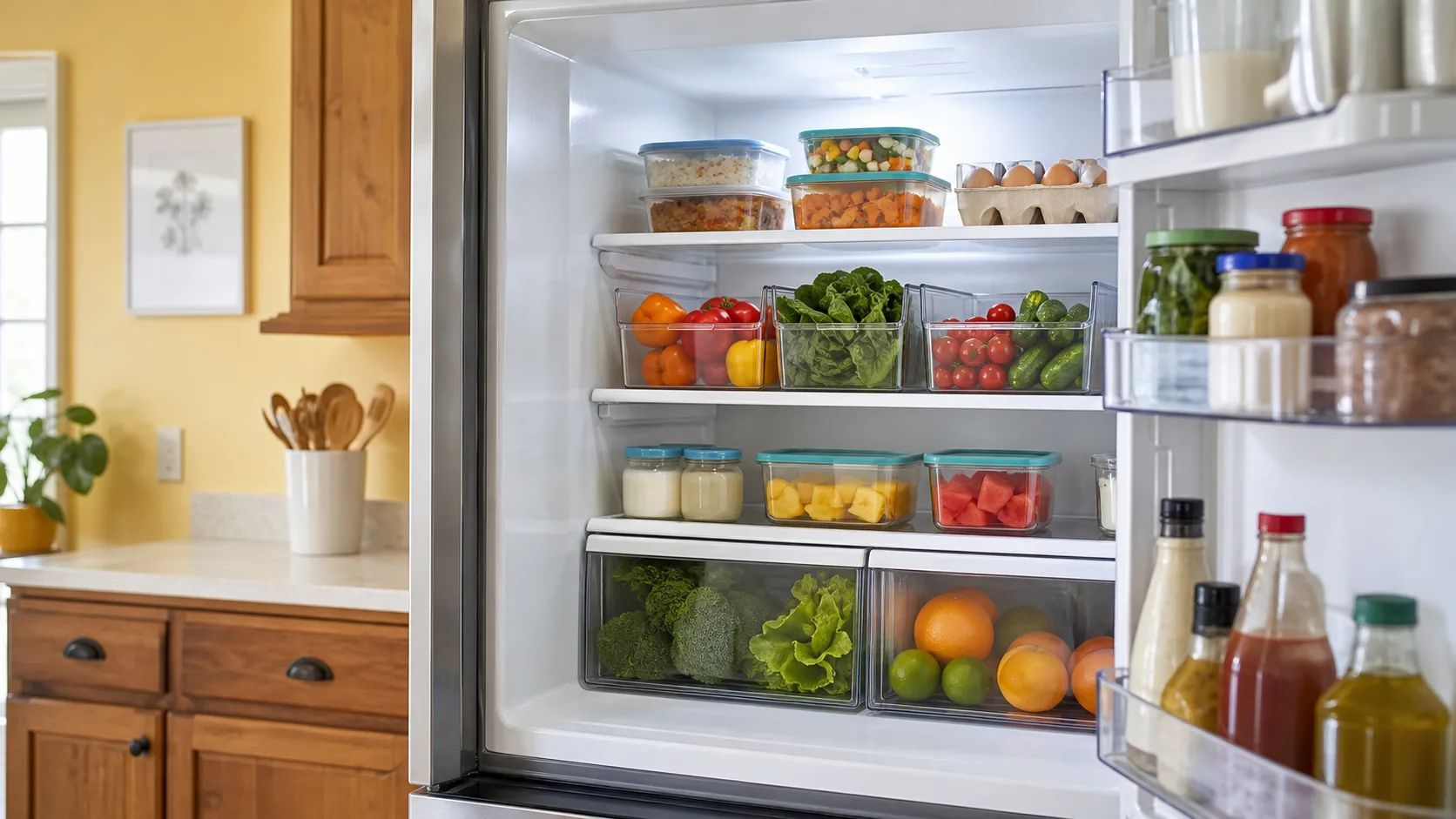
- Top shelf: ready-to-eat foods, leftovers, and anything you want to remember. This is prime real estate. Use it for the stuff that needs to get eaten soon.
- Middle shelf: dairy, eggs, and items that like a steady temperature. The middle is one of the more consistent spots in most fridges.
- Bottom shelf: raw meat, poultry, and fish. This is the coldest area and, just as importantly, the lowest, so nothing can drip onto food below it.
- Drawers: fruits and vegetables, ideally kept separate, since they store best in the humidity the drawers provide.
- Door: the warmest zone, so save it for sturdy items like condiments, sauces, and drinks rather than milk or eggs.
You do not have to be rigid. The point is that perishable, easy-to-forget food sits where your eyes land first.
Give leftovers one obvious home
Leftovers are where good food most often dies quietly.
Pick one specific spot, ideally on the top shelf, and make it the leftovers zone. Everything you want to eat in the next day or two goes there and only there.
Two small upgrades help a lot:
- Use clear containers so you can see what is inside without opening five lids.
- Eat from that zone first. Before cooking something new, check the leftovers spot. Treat it like the front of the line.
When leftovers have a home and a habit attached, they stop becoming the thing you find a week later and toss.
Shop your shelves first
A surprising amount of waste comes from forgetting what you already own.
Before you make a grocery list, look in the fridge. Build the week's meals partly around what is already there and needs using soon: the aging peppers, the open container of yogurt, the half block of cheese.
This does two things. It uses up food before it turns, and it keeps you from buying duplicates that crowd the shelves and hide everything else. A less crowded fridge is a more visible fridge, which means less waste again.
A quick glance before shopping is one of the highest-value habits in the whole kitchen.
Use a "use it soon" spot
Take the leftovers idea one step further with a small "eat me first" area.
Clear a section of the top shelf or a single small bin for anything close to its end: produce going soft, an opened jar, leftovers, the half-used vegetables from last night. Whenever something is getting close, it moves there.
Now you have one place to check when you are hungry or planning a meal. Instead of scanning the whole fridge and missing things, you look at the "use it soon" spot and cook from it. It turns waste prevention into a single, easy glance.
Do a quick cleanout on grocery day
The best time to reset the fridge is right before you fill it again.
On grocery day, take five minutes first:
- Toss anything that is clearly past it
- Move older items to the front and the "use it soon" spot
- Wipe up any spills while shelves have space
- Notice what you have, so you do not rebuy it
This is not a deep clean. It is a quick pass that keeps the fridge from slowly silting up with forgotten jars and limp produce. Pairing it with grocery day means it actually happens, because grocery day comes around on its own.
A few storage tips that extend freshness
Small placement choices make food last noticeably longer.
- Do not wash berries and delicate produce until you eat them; extra moisture speeds spoilage.
- Keep herbs livelier by standing them in a small jar of water like flowers, or wrapping them loosely.
- Store milk and eggs on a shelf, not the door, where the temperature swings every time you open it.
- Give the fridge a little breathing room; an overpacked fridge blocks airflow and cools unevenly.
- Let leftovers cool briefly before sealing, then refrigerate promptly so they keep well.
None of this requires special equipment. It is mostly about where things go and not crowding the shelves.
Keep the system light
You do not need to turn your fridge into a showroom. Bins and labels are optional, not the point.
The whole system comes down to a few ideas: keep soon-to-eat food visible, give leftovers a home, look before you shop, and do a quick reset on grocery day. That is enough to cut most of the waste in a normal kitchen.
A fridge that wastes less food is usually just a fridge where you can see what you have.
What to try first
Before your next grocery run, clear one small section of the top shelf and call it the "use it soon" spot. Move anything close to its end into it.
Then, when you are deciding what to cook, look there first.
That single change, food you can actually see, tends to save more groceries than any container or gadget ever will.