Coming home should not feel like starting a second shift. But for a lot of homes, the entryway becomes the place where every unfinished thing lands: shoes, bags, keys, mail, returns, jackets, dog leashes, receipts, and the item you absolutely meant to bring back to the car.
The answer is not always a bigger closet or a perfect mudroom. Most entryways get easier when every daily object has one obvious place to land. These small changes are meant for real homes: apartments, narrow hallways, busy family entrances, and front doors that open straight into the living room.
Quick answer
If your entryway feels messy, start with three landing zones: one for hands, one for feet, and one for paper. That usually means a tray or hook for keys, a basket or rack for shoes, and a small inbox for mail. After those are working, add bag storage, a reset basket, and one weekly five-minute clear-out.
Do not buy a full organizing system first. Watch what piles up for two or three days, then choose storage that matches the mess you actually have.
1. Give keys one landing spot
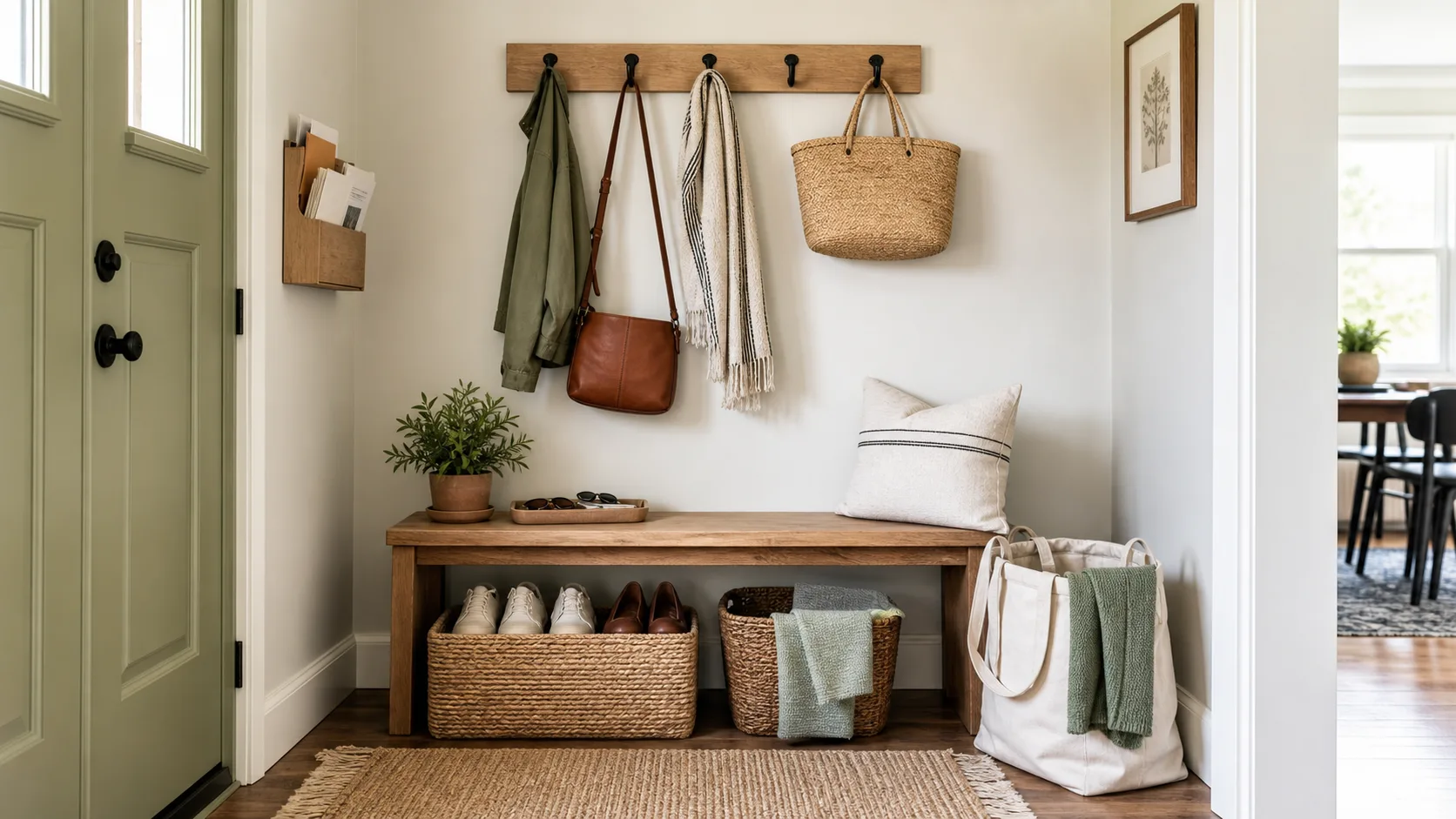
Keys need a home that is impossible to miss. A bowl on a console table works. A small wall hook works. A tray on top of a shoe cabinet works. The best choice is the one you will use when your hands are full.
If keys currently move between your purse, kitchen counter, coat pocket, and random tables, do not make the solution complicated. Put the landing spot within one step of the door you use most.
Useful options:
- A small tray for keys, sunglasses, and lip balm
- A wall hook if there is no table space
- A magnetic key holder inside a closet door
- A tiny basket on a shelf near the entrance
The rule is simple: keys do not go deeper into the house.
2. Add a shoe decision point
Shoes create entryway clutter because most homes do not have a clear decision point. Are shoes allowed to stay by the door, or should they go to bedrooms and closets? Either answer can work, but the entryway needs a limit.
For a small household, one slim shoe rack may be enough. For a family, a basket per person can be easier than asking everyone to line shoes up neatly. If your entry is very narrow, use vertical space or place a shoe basket just around the corner.
Try this rule for one week: each person gets two pairs near the door. Everything else goes back to its real storage spot.
3. Create a bag drop that does not block the floor
Bags often land on chairs, stairs, or the floor because hooks are missing or too weak. A good bag drop needs to hold real weight: a work tote, gym bag, backpack, or reusable shopping bags.
If you can mount hooks, choose sturdy ones and place them where bags will not hit people walking by. If you rent or do not want wall holes, use an over-the-door rack, a freestanding coat tree, or a low basket for soft bags.
Keep the bag zone small. When the spot is full, that is your signal to empty old receipts, snack wrappers, and things that belong elsewhere.
4. Put mail in one small inbox
Mail does not need a large command center at first. It needs one place to wait until you can make a decision.
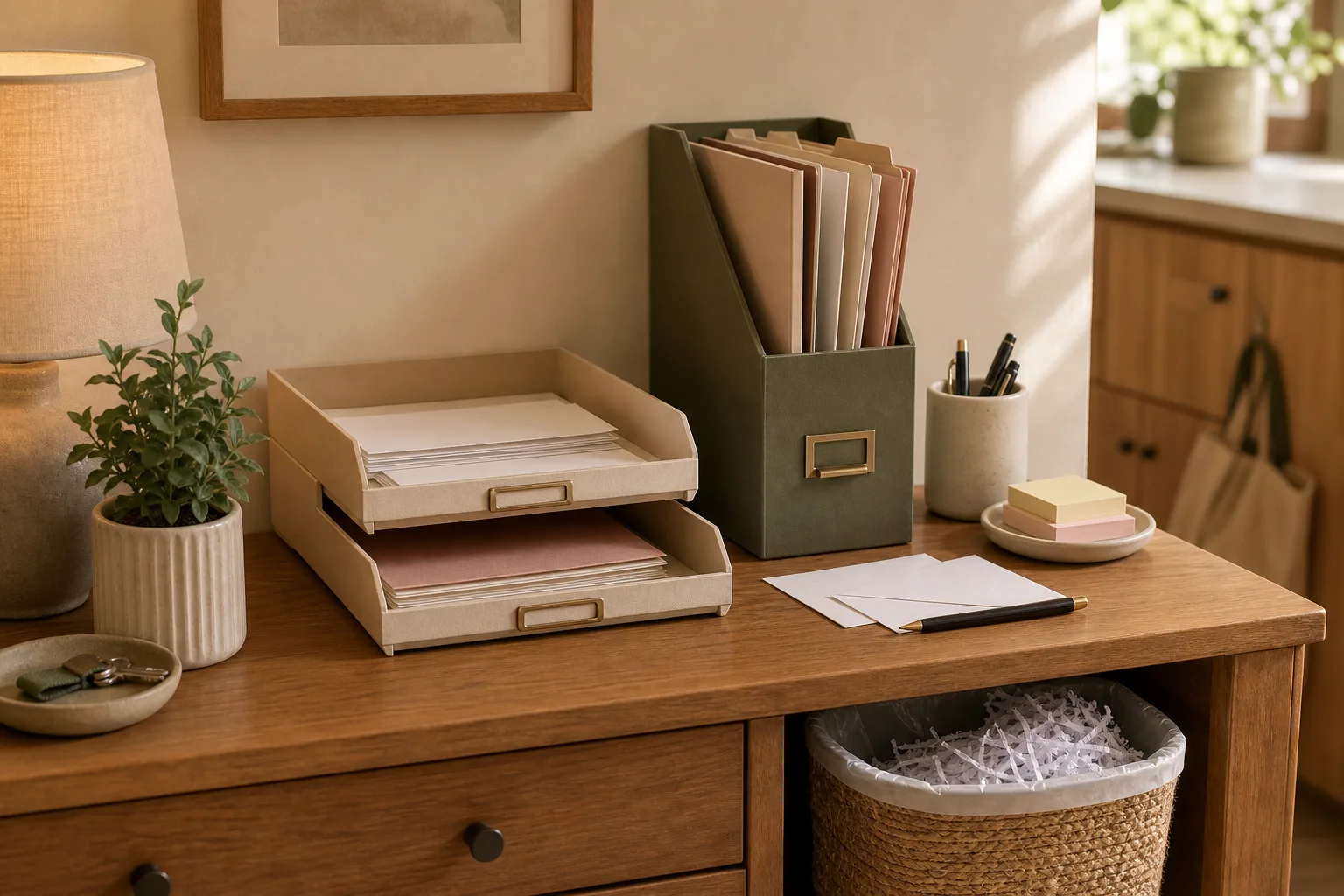
Use a letter tray, wall pocket, shallow basket, or magazine holder. Keep it small on purpose. A small inbox becomes full quickly, which reminds you to process it. A huge basket quietly becomes an archive of things you never wanted.
Sort mail into three actions:
- Recycle immediately
- Handle this week
- File or keep
If a paper needs action, write the action on a sticky note or put it in a folder labeled "This Week." The goal is not to make paper beautiful. The goal is to stop paper from spreading.
5. Keep a small return-and-donation bag near the door
Many entryways collect things that are almost leaving the house: library books, store returns, borrowed items, donations, packages, and things that need to go back to the car.
Give those items a temporary exit spot. A canvas tote, handled basket, or sturdy reusable shopping bag can work. Label it if other people in the home need the reminder.
Check it before errands. If you already pass the bag when leaving, you are more likely to take the return or donation with you.
6. Add one reset basket for things that belong elsewhere
An entryway often collects objects from other rooms because people drop things while coming and going. Instead of walking each item back immediately, use one reset basket.
This basket is not permanent storage. It is a short-term holding spot for things that need to be returned to bedrooms, bathrooms, the car, or the kitchen.
Empty it at a predictable time:
- Before bed
- After dinner
- During a Sunday reset
- Before trash day
If the basket is always overflowing, make it smaller. A smaller basket forces a faster reset.
7. Make the weekly clear-out very short
The entryway does not need a deep clean every day. It needs a weekly clear-out that is short enough you will actually do it.
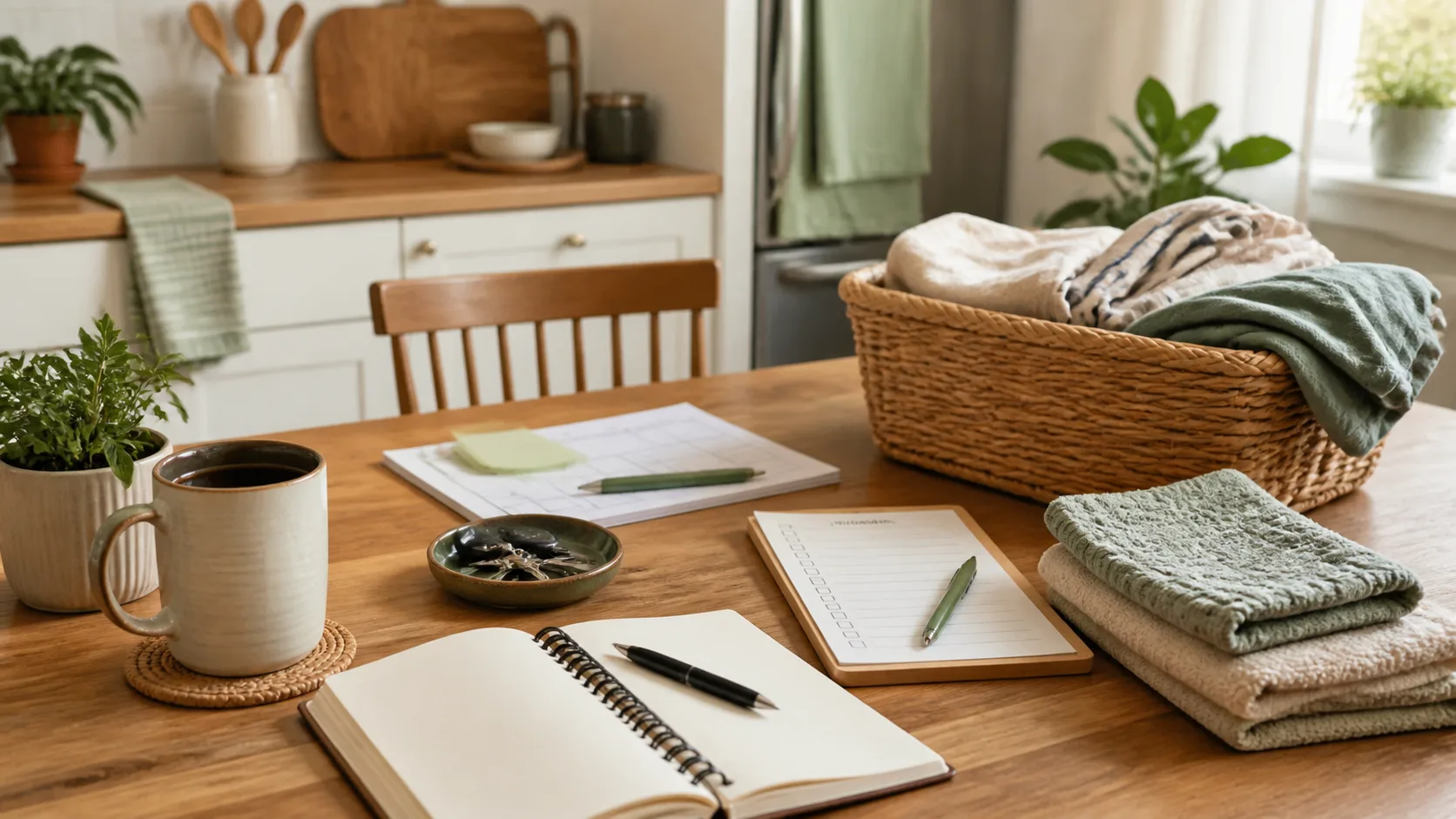
Set a timer for five minutes and move through this checklist:
- Put extra shoes away.
- Empty the mail inbox.
- Take returns or donations to the car.
- Clear the key tray.
- Shake out or vacuum the doormat.
- Put stray items into the reset basket.
- Wipe the surface people touch most.
Stop when the timer ends. The point is to keep the entrance functional, not showroom-perfect.
What to buy only if it solves the real problem
Entryway products are easy to overbuy. Before buying anything, name the problem clearly.
If keys disappear, try a tray or hook. If shoes spread, try a rack or individual baskets. If mail piles up, try a wall pocket or small inbox. If bags block the floor, try hooks or a sturdy bag basket.
Good entryway products usually have three qualities:
- They are easy to use with one hand.
- They fit the actual space, not an imaginary bigger one.
- They make the next action obvious.
Skip anything that requires everyone to become a different person. The best system works even on a tired Tuesday.
A simple starter setup
If you want to make the entryway easier this week, start here:
- Put a tray or hook near the door for keys.
- Choose one shoe limit.
- Add one small mail inbox.
- Place one bag for returns and donations near the exit.
- Set a five-minute reset for the same day every week.
That is enough to feel a difference. You can add prettier storage later, after you know what the space actually needs.
What to try first
Choose the one item that annoys you most when you walk in the door. Keys, shoes, bags, mail, or returns. Fix only that landing spot today.
When one landing spot works, the entryway starts to feel less like a pile of unfinished tasks and more like a quiet handoff between outside life and home.