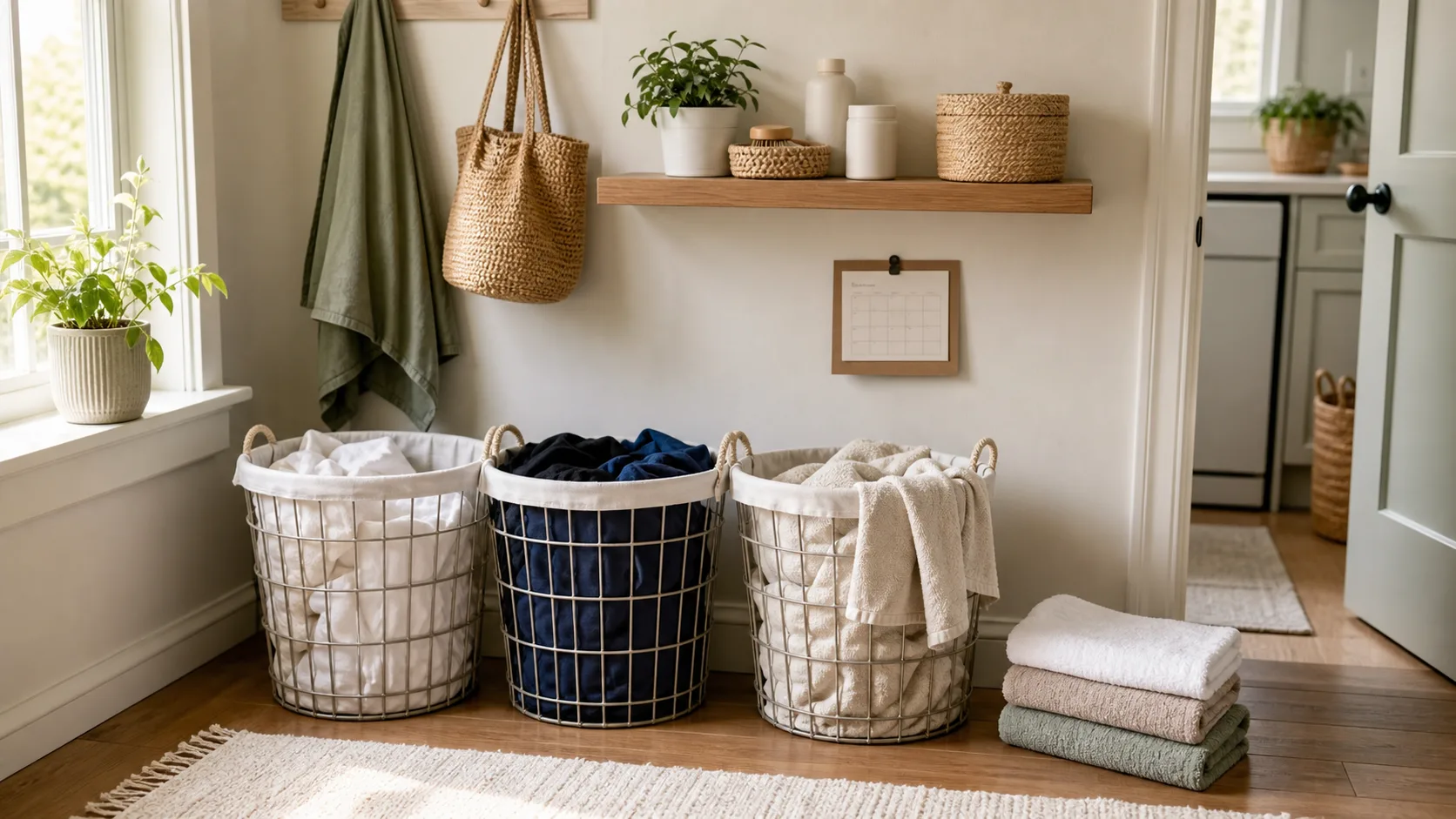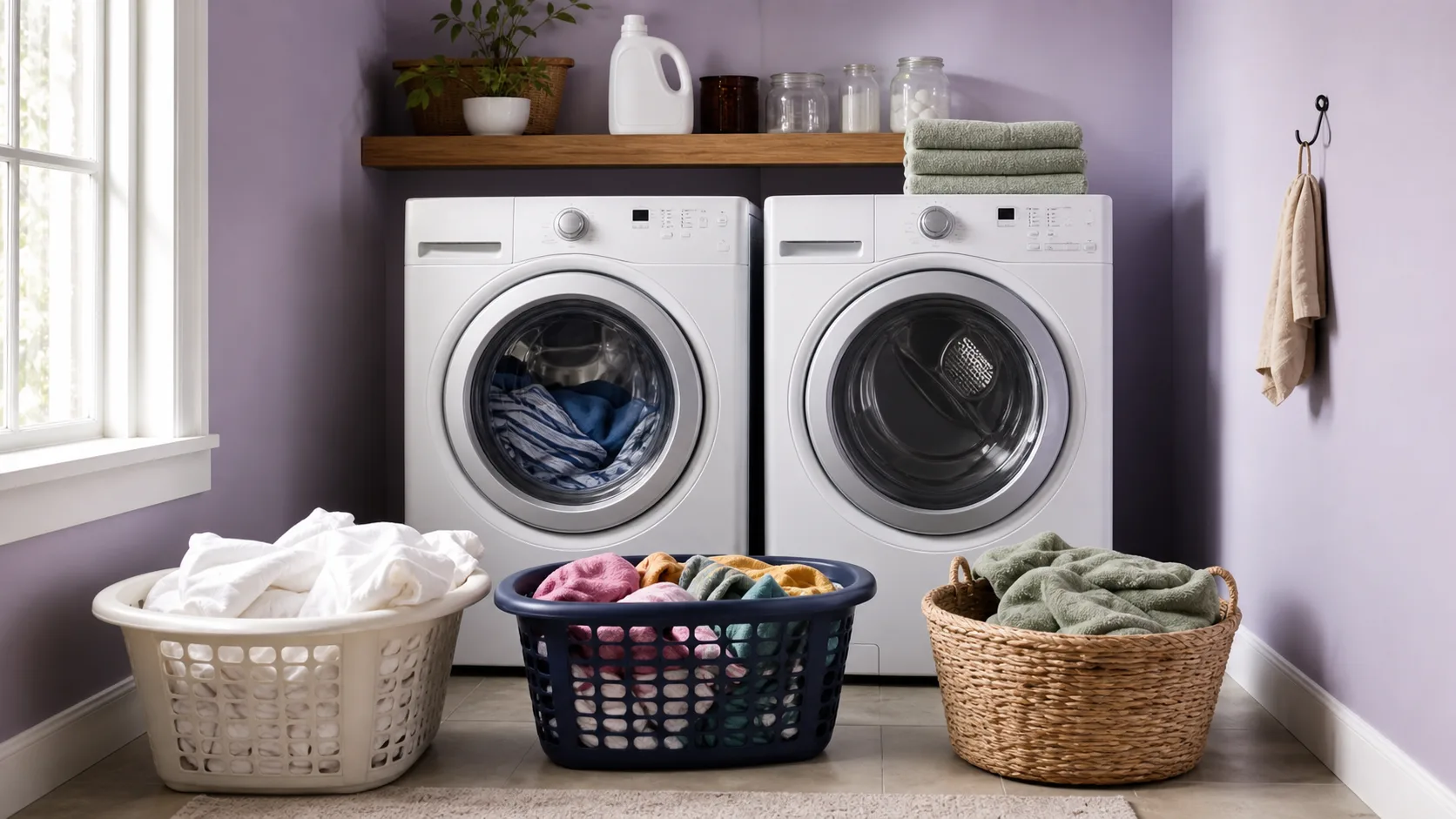
There is a quiet question behind a lot of laundry guilt: am I washing this too often, or not often enough?
Some people wash bath towels after every use. Others use the same towel for a week and feel fine. Some change sheets weekly without thinking. Others suddenly realize it has been a month.
The truth is that most "rules" about laundry are softer than they sound. The right frequency depends less on a calendar and more on how an item is used, how much it touches your skin, and how warm and sweaty your life is right now.
This guide gives reasonable starting points, then explains how to adjust them for your own home.
Quick answer
As a general starting point: wash underwear, socks, and gym clothes after every wear; shirts and tops after one or two wears; jeans and sweaters after several wears; bath towels after three or four uses; and sheets about once a week. Wash more often when things are sweaty, soiled, or worn against bare skin, and less often for outer layers that barely touch you. Use, not a strict schedule, is the real guide.
Think of the numbers below as defaults you can shift, not laws.
Clothes you wear close to the skin
Anything that sits directly against your skin and absorbs sweat or oils needs washing most often.
- Underwear and socks: after every wear. This one really is non-negotiable.
- Undershirts and camisoles: after every wear.
- Workout clothes: after every session. Sweat and bacteria do not air out; they just wait.
- Tights and leggings worn for exercise: after every wear.
These items are doing the hard job of sitting against you all day. Rewearing them does not save much and tends to trap odor.
Tops, shirts, and everyday clothes
Outer everyday clothes have more flexibility.
- T-shirts and casual tops: after one or two wears, sooner if it was warm or active.
- Dress shirts and blouses: after one or two wears. A collar or cuff that looks clean may still hold oils.
- Sweaters: after several wears, especially over an undershirt.
- Jeans: after several wears. Many people wash them far more than needed, which wears them out faster.
- Pajamas: after a few nights, sooner if you run warm or shower at night versus morning.
A good test: smell and look. If it is visibly soiled or holds odor, wash it. If it genuinely looks and smells clean and never touched bare skin much, another wear is usually fine.
Bedding and the things you sleep on
You spend a third of your life in bed, and your sheets quietly collect sweat, skin cells, and oils the whole time.
- Sheets and pillowcases: about once a week. Stretch to every two weeks if you shower before bed and do not sweat much; tighten to more often in hot weather or if you have allergies.
- Duvet cover: every couple of weeks to monthly.
- Pillows (the actual pillow): wash or refresh every few months; check the care label.
- Comforter or duvet insert: a few times a year.
- Mattress protector: monthly is a reasonable default.
If you let pets sleep on the bed, or you go to sleep with damp hair or skincare on, move sheets to the more frequent end.
Towels and bathroom textiles
Towels feel clean because they dry you after you are clean, but they stay damp, which is exactly what bacteria like.
- Bath towels: after three or four uses, hanging them to dry fully between each. If a towel stays damp or smells musty, wash it sooner.
- Hand towels: every few days. They get touched constantly and stay damp.
- Washcloths: after every use, since they exfoliate and hold residue.
- Bath mats: weekly to every couple of weeks.
The key with towels is drying, not just washing. A towel spread out to dry lasts far longer between washes than one balled up on a hook.
The items people forget
These are the quiet ones that rarely make it into a routine.
- Bras: every few wears, not every wear, to protect the elastic.
- Pillows you lean on (couch and decorative): covers every month or two.
- Reusable shopping and lunch bags: regularly, especially after raw food or spills.
- Kitchen towels and dishcloths: every day or two; they spread more than people expect.
- Bathrobe: weekly to every couple of weeks, like a towel.
- Hats and beanies worn often: every several wears.
- Throw blankets in heavy use: every couple of weeks.
You do not need to track all of these. Just knowing they exist helps you notice the one that has clearly been skipped for too long.
How to adjust the defaults
Every number above moves based on a few simple factors.
Wash more often when:
- You sweat a lot or live somewhere hot and humid
- You have allergies, sensitive skin, or skin conditions
- Pets share your furniture or bed
- The item is visibly dirty or smells, regardless of the "schedule"
- You exercise or do physical work in it
You can wash less often when:
- The item is an outer layer that barely touches your skin
- It is cool, dry weather and you are not very active
- The item looks and smells genuinely clean
- It is delicate and frequent washing would damage it
When in doubt, your senses beat the calendar. Dirty or smelly means wash, no matter how recently you last did.
Make it a light routine, not a chore
You do not need a spreadsheet for this. A loose rhythm is enough.
A simple version:
- Everyday clothes get sorted into the hamper by feel, washed when you have a full load
- Sheets get a standing day, like the same morning each week
- Towels get washed when they stop feeling fresh, and always hung to dry between uses
- Once a month, glance at the "forgotten" items and catch whatever is overdue
That is really all it takes. The goal is not perfect tracking. It is washing things often enough to stay fresh, without wearing them out or doing laundry you did not need to do.
What to try first
This week, pick the one item you have been quietly unsure about, probably sheets or bath towels.
Set a simple anchor for it: sheets on a chosen morning, towels hung to dry and swapped after a few uses. Let everything else stay as it is for now.
Once that one item has an easy rhythm, the rest of your laundry tends to fall into place around it.