Sunday can feel like a strange mix of rest and worry. You want the weekend to last, but part of your mind is already counting lunches, laundry, appointments, school papers, work bags, groceries, and the things you forgot to do on Friday.
A Sunday reset does not need to become a full-house cleaning day. In fact, it works better when it is small. The goal is to remove a few obvious points of friction before the week starts, so Monday morning feels less like a surprise.
This reset is built for real homes. Set a timer for 20 minutes, move quickly, and stop when the timer ends.
Quick answer
For a calmer week, use 20 minutes on Sunday to reset five places: the kitchen landing spots, laundry, meals, calendar, and tomorrow morning's first step. Do not try to clean the whole house. Choose the places that affect Monday most.
If you only have 10 minutes, clear the kitchen counter, check tomorrow's clothes, and write down the first three things that must happen Monday morning.
Before you start: choose only five reset zones
The easiest way to ruin a Sunday reset is to make it too ambitious. You are not deep cleaning. You are preparing the house to support the next few days.
Focus on five zones:
- Kitchen surfaces
- Laundry status
- Simple meals
- Calendar and bags
- One visible room
If another task appears while you are resetting, write it down instead of doing it immediately. The timer is there to protect you from accidentally turning a short reset into a two-hour project.
Minute 0 to 3: clear the kitchen landing spots
Start with the kitchen because it affects almost everything: breakfast, lunches, water bottles, coffee, dinner, and the general feeling of the house.
Do a fast surface reset:
- Put dishes into the sink or dishwasher.
- Throw away obvious trash.
- Return food to the pantry or fridge.
- Clear one meal prep area.
- Put mail, receipts, and random papers into one pile.
Do not reorganize cabinets. Do not scrub appliances. Do not start a pantry project. You are only making tomorrow's first kitchen moment easier.
If the kitchen is very messy, choose one counter or one end of the table. A single clear zone is better than giving up because the whole room cannot be finished.
Minute 3 to 6: check laundry before it becomes Monday's problem
Laundry does not need to be finished on Sunday, but it does need to be known. The panic usually comes from discovering too late that a needed item is dirty, wet, or still in a basket.
Ask three questions:
- Does anyone need a specific outfit, uniform, towel, or work item tomorrow?
- Is there a wet load sitting in the washer?
- Is there a clean basket blocking a bed, chair, or walkway?
Move only what matters for Monday. Start one necessary load, switch a wet load to the dryer, or fold the few items that must be ready. Leave the rest for another planned laundry time.
The win is not "all laundry done." The win is "nothing urgent is hiding."
Minute 6 to 9: choose three simple meals
Meal planning can get too complicated very quickly. For this reset, do not plan every bite. Choose three simple meals that can carry the beginning of the week.
Use meals you already know:
- A sheet pan dinner
- Soup and bread
- Tacos or bowls
- Pasta with vegetables
- Rotisserie chicken with salad
- Eggs, toast, and fruit
Write the meals somewhere visible. Then check if you are missing one important ingredient. If you are, add it to the grocery list.
This is not about becoming a perfect meal planner. It is about removing the "what are we eating?" question from at least a few evenings.
Minute 9 to 12: reset the calendar and bags
Now look at the next three days, not the whole month. The next three days are usually enough to catch the things that create stress.
Check for:
- Appointments
- School or work deadlines
- Early mornings
- Sports, classes, or activities
- Trash or recycling day
- Library books, returns, or packages
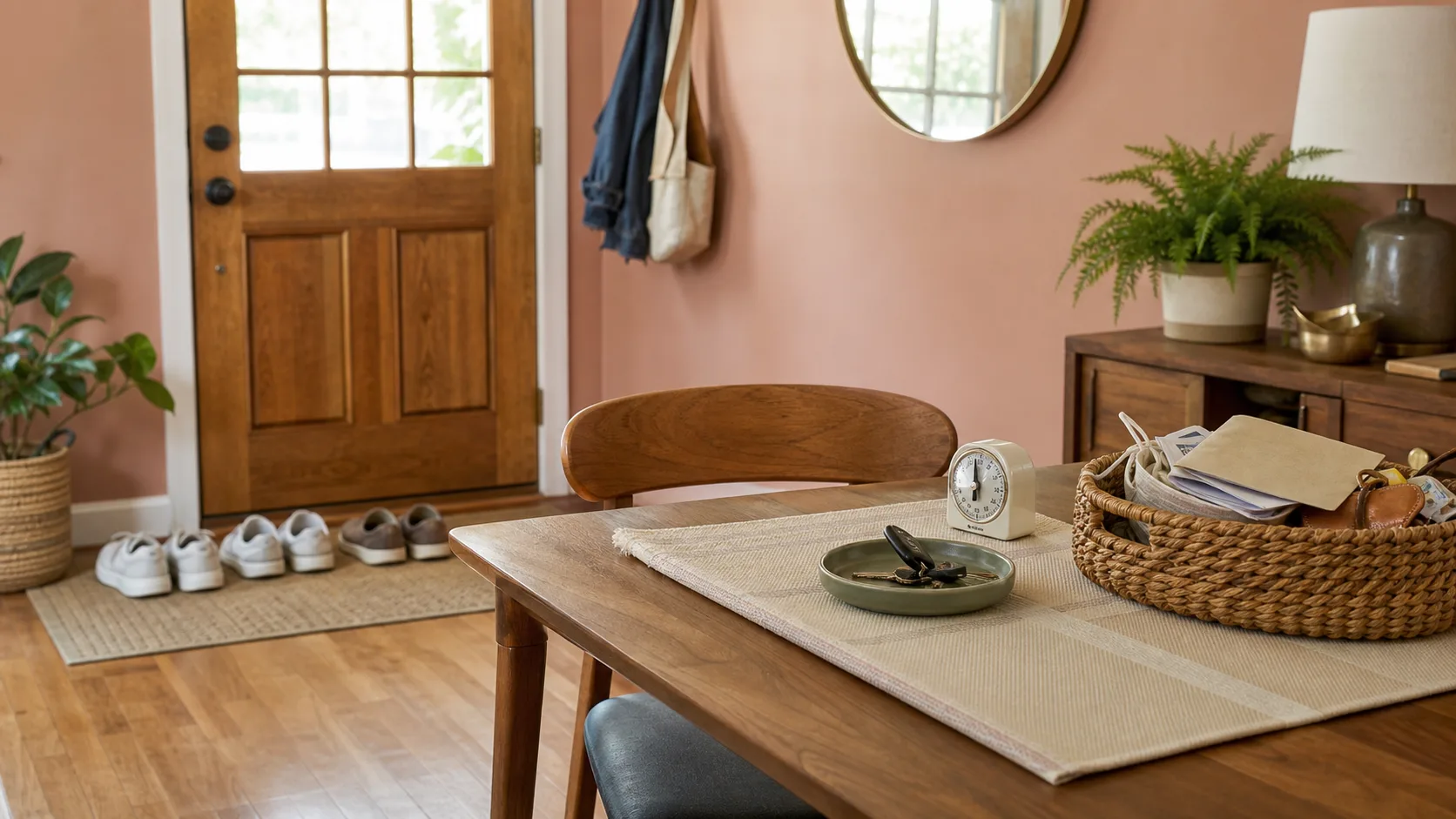
Then prepare bags for the first morning of the week. Put anything that needs to leave the house near the door: keys, forms, returns, water bottles, laptop charger, or library books.
If you have children at home, this is a good time to ask one simple question: "What do you need tomorrow that is not already in your bag?"
Minute 12 to 15: make one room feel ready
Choose one visible room that affects your mood. This might be the living room, entryway, bedroom, or kitchen table.
Do a quick reset:
- Put blankets back.
- Clear cups and plates.
- Gather stray clothes.
- Put toys or hobby supplies into one basket.
- Straighten the surface you notice first.
Do not aim for perfect. Aim for a room that does not immediately ask something from you when you walk into it.
For many homes, the best choice is the entryway. A clear entrance makes Monday feel easier before the day even begins.
Minute 15 to 18: remove visible friction
Visible friction is anything small that keeps irritating you because you see it again and again. The goal is to remove one or two of those things before the week starts.
Examples:
- Empty the trash that is already full.
- Put the return package by the door.
- Refill the soap dispenser.
- Put clean towels in the bathroom.
- Replace the toilet paper roll.
- Charge the device that is always dead.
- Put the important paper where you will see it.
These tiny tasks matter because they lower the number of small decisions waiting for you on Monday.
Minute 18 to 20: choose tomorrow's first easy win
End the reset by choosing one first easy win for Monday morning. This should be very small and very specific.
Good examples:
- Start coffee before checking messages.
- Put a load of towels in after breakfast.
- Take the return bag to the car.
- Empty the lunch containers before work.
- Walk for 10 minutes after school drop-off.
- Clear the kitchen table before dinner.
Write it down. A small clear action is easier to begin than a vague promise to "be more organized."
What not to do during a Sunday reset
Some tasks are useful, but they do not belong inside a 20-minute reset.
Avoid these during the timer:
- Cleaning the whole fridge
- Reorganizing closets
- Starting a donation sort
- Reworking the family calendar system
- Deep cleaning bathrooms
- Looking for the perfect storage product online
- Planning every meal for the month
If one of those tasks genuinely needs attention, schedule it separately. The Sunday reset should stay light enough that you are willing to repeat it next week.
A simple printable version
Here is the short version to keep on your phone or write in a notebook:
- Clear one kitchen surface.
- Check urgent laundry.
- Pick three simple meals.
- Review the next three days.
- Put leaving-the-house items by the door.
- Reset one visible room.
- Fix one small irritation.
- Choose Monday's first easy win.
That is enough. A home does not need to be fully reset to feel easier.
What to try first
This Sunday, do the reset exactly once with a timer. Do not buy anything, redesign anything, or make it a new family rule yet.
Afterward, notice which part helped most. Maybe it was seeing the meal plan. Maybe it was knowing the laundry situation. Maybe it was walking into a clearer kitchen on Monday morning.
Next week, repeat that part first. The best home systems are the ones you can actually live with.